PROCEDURE
When handling urine or any body fluids, it is imperative that proper precautionary and sanitary procedures are followed. Urine samples should be disposed of in a toilet, not a sink. Any containers or items that have come into contact with urine should be properly disposed of or soaked for 1 hour in disinfectant solution. The single most important precautionary step is to handle only your own sample. Wear gloves, and use disinfectant solution to wipe down all work areas on which you have handled urine.
Note: For best results, it is important that you do not consume anything other than a small quantity of water for 2-3 hours before you begin this experiment. If you have recently consumed anything that could interfere with this experiment (such as salty foods or caffeinated beverages), you should empty your bladder and wait 1 hour before starting this experiment.
- If possible work with two other people so each person can test one of the items (pretzel, distilled water, caffeine). If that is not possible wait a minimum of two hours after each experimental trial to begin the next test (this could be overnight as well). It is not advisable for a person with high blood pressure or other cardiovascular or urinary system disorders to consume either the caffeinated beverage or pretzels.
- Consume one of the following within 5 minutes time:
- One serving of pretzels (see food label for serving size) and no more than 3-4 ounces of tap water
- Three 8-ounce cups of distilled water
- Twelve ounces of caffeinated coffee, tea, diet soda or diet "energy drink"
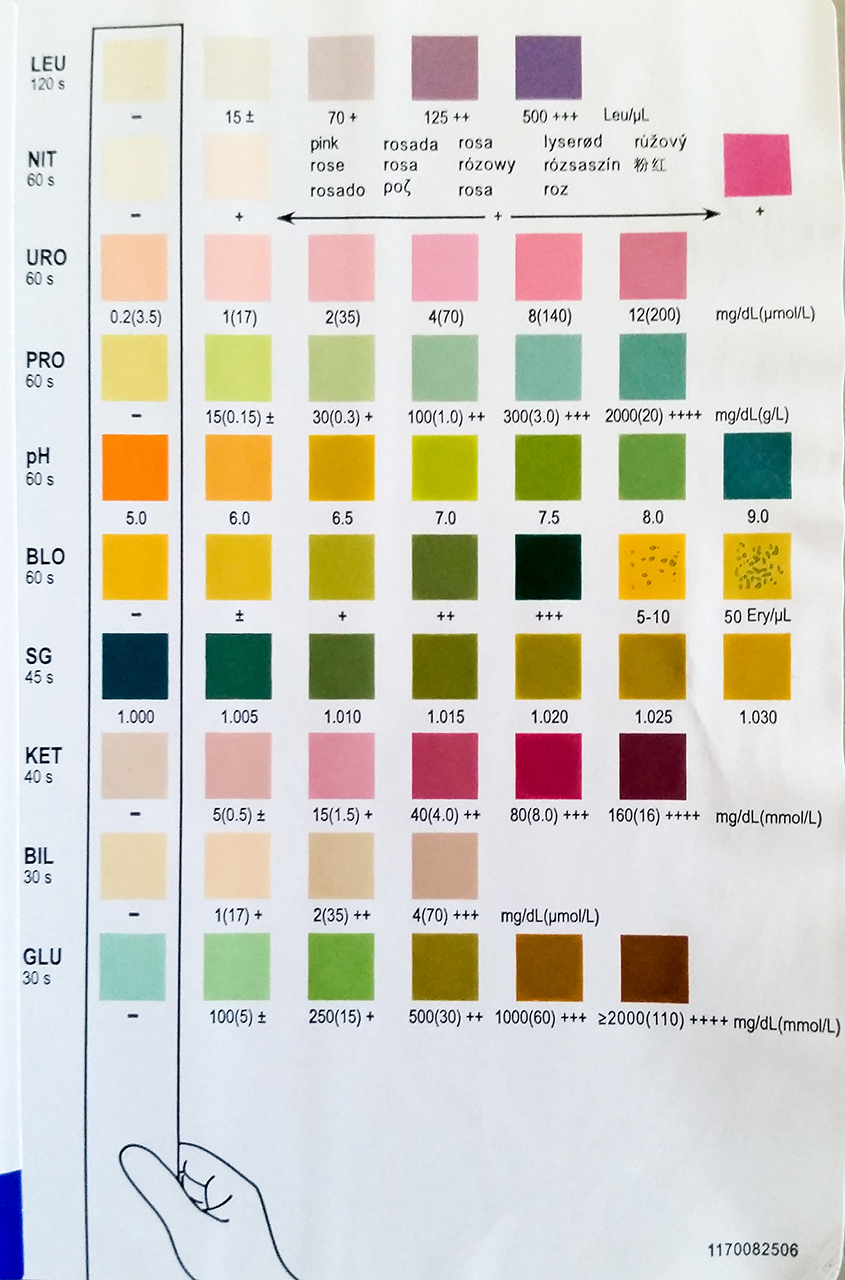
- Obtain a specimen container (disposable cup or plastic beaker with graduated lines), and obtain a sample of your urine immediately after consuming the item in step 2. Test this sample for pH, specific gravity, ketones, protein and glucose. Enter that information as your baseline data in Table 1. Obtain and record the information for the other two test items in Table 1 (this may need to be completed three separate times if working alone). ----- Here is the color chart if using the urine strips purchased from the book store.
- Half an hour after the start of the experiment, attempt to obtain another sample. Test your sample, this time recording the volume as well. If you produce more urine than the sample container can hold, do your best to estimate the amount. If you cannot produce a sample at the 1/2 hour point (which is likely for at least one of the test items), write "no data" in the 1/2 hour column boxes and wait for the 1 hour interval.
- One hour after the start of the experiment, obtain another sample. Test your sample for pH, specific gravity, ketones, protein, glucose and volume. Again, if your produce more urine than the sample container can hold, do your best to estimate the amount. Repeat at 1.5 and 2 hours from start time and enter your data in Table 1.
|
|